The Elephants in the Room
Blog

Følg dette link til min blog, The Elephants in the Room.
Her på siden finder du udvalgte blogindlæg.
Why is Valentine’s Day a thing?
February 14th, 2020
“The day first became associated with romantic love within the circle of Geoffrey Chaucer in the 14th century, when the tradition of courtly love flourished. In 18th-century England, it grew into an occasion in which couples expressed their love for each other by presenting flowers, offering confectionery, and sending greeting cards (known as “valentines”). Valentine’s Day symbols that are used today include the heart-shaped outline, doves, and the figure of the winged Cupid. Since the 19th century, handwritten valentines have given way to mass-produced greeting cards.
(…)
“In the United States, about 190 million Valentine’s Day cards are sent each year, not including the hundreds of millions of cards school children exchange.
Valentine’s Day is a major source of economic activity, with total expenditures in 2017 topping $18.2 billion, or over $136 per person. This is an increase from $108 per person in 2010.”
– Wikipedia
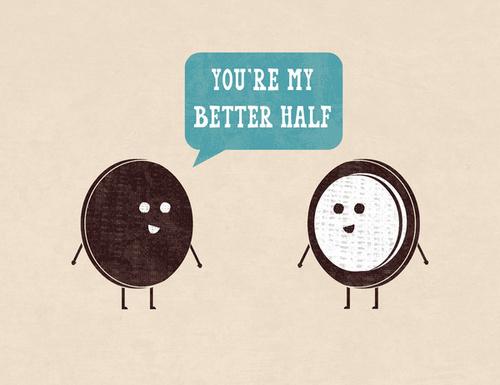
There are many opinions on Valentine’s Day out there. Some celebrate it every year; singles often either moan and complain about it, or make it about self-love. Some say it’s all just mass-produced and materialistic, with companies trying to make as much money off of it as possible. In the US, Valentine’s Day seems to be a very big deal, even in schools. Children of all ages are encouraged to give out hand-written Valentine’s cards, and if you don’t get one, it’s embarrassing and sad.
In Japan, it’s custom to – and often expected of – women to give chocolate to men, not just to their significant other, but also their male bosses and co-workers. In return, “[in] the 1980s, the Japanese National Confectionery Industry Association launched a successful campaign to make March 14 a “reply day”, where men are expected to return the favour to those who gave them chocolates on Valentine’s Day, calling it White Day for the color of the chocolates being offered” (Wikipedia). (Read more about the Japanese Valentine’s Day and White Day here and here.)
Now, in Denmark, it hasn’t really caught on completely. Some people celebrate the American way, with chocolates, flowers, and/or greeting cards. Both partners are expected to give something to the other. Personally, I’ve never really celebrated Valentine’s Day. Well, that’s not entirely true; I’ve given previous boyfriends chocolate, as far as I can remember. But I only have two exes, and we’d share the chocolate anyway. However, my second boyfriend, with whom I had a very long relationship, and I met when we were both studying Japanese. He thought it was fun with the Japanese tradition, so I think we celebrated it like that a few times. I’d get him something on February 14, and he’d get me something on March 14. But it was never really that important to us…
… because we knew how to express our love to each other on a day-to-day basis. Little presents here and there; sometimes I’d treat him to a nice dinner, and vice versa. We didn’t need to schedule a specific day to show each other how much we cared. We’d do small gestures, like leaving a sticky-note on the other’s computer, writing something sweet and draw a heart or something, so they’d find it after coming home from work or school or whatever. Or we’d give each other things that were more of a present for ourselves; one time, he bought me a bluetooth speaker for my phone, so I’d have better sound when watching YouTube videos. He was quite sensitive to sound, so I got a nice present, and he didn’t have to listen to whatever I was watching with my crappy built-in phone speaker.
My current (and hopefully forever-)boyfriend and I have a similar arrangement; we take turns in cooking dinner (or ordering in when we’re both tired), spend as much time together as possible, text each other sweet things even if we’re sitting right next to one another… We support, root for, and take good care of each other. To us, this is so much better, more natural, and more important than attributing showing our love to one day. Also, it wasn’t Valentine’s Day yesterday, and he still brought Ben&Jerry’s after work. I sometimes provide red wine for him, or cookies. … So, basically, we both love feeding each other. Wonderful, right?
We don’t even exchange presents for Christmas or birthdays. A trip to the cinema and a nice meal will do the trick. Or just a nice night in, with order-in sushi and Netflix. Absolutely perfect. I mean, I guess that is a present of sorts; but at least it’s something we both enjoy, and isn’t limited to just one day of the year.
If you really want to give someone something for Valentine’s Day, or any other holiday for that matter, I truly believe that giving your time and attention is the best gift in the whole world. Especially in this day and age, where you have to schedule a meet-up with your friends months in advance. (This is definitely a problem here in Denmark, I think, particularly in the bigger cities.)
I mean, celebrating Valentine’s Day can be really nice. Just don’t rely on it to be the only day to show someone your affection. Do a little somethin’-somethin’ every once in a while. It doesn’t have to be gift-giving, or cost any money at all. There are other ways to show appreciation than with things.
What are your thoughts on this romantic holiday?
I misread my favorite poem
Septemper 4th, 2019

As has anyone I’ve ever talked to about it.
I’m talking about “The Road Not Taken” by Robert Frost. When searching for the poem to introduce a blog post I wanted to write, I came across many articles about how this poem has been commonly and terribly misread. After reading a few of them, I realized that I had been fooled; perhaps because I wanted to read it the way I did. But certainly also because that was how it was analyzed when we talked about it in school.
One of the first points that struck me particularly hard is the fact that I googled “The Road Less Travelled by,” not “The Road Not Taken.” I legitimately thought that was the title. Turns out, so do thousands of others. It’s a common mistake – a mistake that stems from the wrong conclusions about the poem.
“Recall the poem’s conclusion: “Two roads diverged in a wood, and I— / I took the one less traveled by, / And that has made all the difference.” These are not only the poem’s best-known lines, but the ones that capture what most readers take to be its central image: a lonely path that we take at great risk, possibly for great reward. So vivid is that image that many readers simply assume that the poem is called “The Road Less Traveled.” Search engine data indicates that searches for “Frost” and “Road Less Traveled” (or “Travelled”) are extremely common, and even accomplished critics routinely refer to the poem by its most famous line.”
I, as many others, was convinced that the poem was about “taking the road less travelled by,” which “made all the difference.” Meaning that you shouldn’t necessarily choose the paved path in life that society seems to believe is “the right way;” you should feel free to choose your own path, even though it might be unconventional, different, frowned upon.
Turns out, I was wrong.
Here’s one reason why:
“The Road Not Taken” has confused audiences literally from the beginning. In the spring of 1915, Frost sent an envelope to Edward Thomas that contained only one item: a draft of “The Road Not Taken,” under the title “Two Roads.” According to Lawrance Thompson, Frost had been inspired to write the poem by Thomas’s habit of regretting whatever path the pair took during their long walks in the countryside—an impulse that Frost equated with the romantic predisposition for “crying over what might have been.” Frost, Thompson writes, believed that his friend “would take the poem as a gentle joke and would protest, ‘Stop teasing me.’”
He basically wrote the poem to tease his friend Edward Thomas.
If you read the whole article, or at least the first part before Orr starts to analyze and compare other poems to “The Road Not Taken,” it’ becomes clear that it’s much more ambiguous than even Frost apparantly claimed to have intended. Still, this particular point really brough it home for me:
“What is gained by “roads”? Primarily two things. First, a road, unlike a path, is necessarily manmade. Dante may have found his life similarly changed “in a dark wood,” but Frost takes things a step further by placing his speaker in a setting that combines the natural world with civilization—yes, the traveler is alone in a forest, but whichever way he goes, he follows a course built by other people, one that will be taken, in turn, by still other people long after he has passed.”
As ambiguous as the poem may be, it’s quite clear that this common reading of the poem does not hold up. Since the first time I read it I’ve considered this my favorite poem, because of what I thought it represented. I was so sure of its meaning that I never once questioned it.
I just told my boyfriend about this, and he was very sceptical, and noted that this is just one way of looking at the poem. He said that it’s art and that making an analysis of poetry and fiction in general can never be objective and true. It’s all subjective. Still, for me, the meaning of this poem has definitely changed.
You are probably asking yourself: So what?
Well, I wanted to use the poem as an introduction to a blog post titled “How my view on life has changed.” And now I can no longer use it as an imagery for that.
Again, you might be asking: ….. So what?
I don’t know. It just feels weird. I’ve always felt a sort of connection to this poem, and now that connection is lost. However… is it possible for me to find a new meaning of it that might apply to me somehow? I think it is.
Let’s try and look at it this way: Frost teased his friend Edward Thomas because he equated Thomas’ “habit of regretting whatever path the pair took during their long walks in the countryside” as “an impulse […] with the romantic predisposition for “crying over what might have been.” Maybe Frost just didn’t believe in regretting not going down a different road, that they’re all man-made anyway, that someone has already paved the way, and that no matter which way you choose, it won’t be that different, new, or original? If that is the case, then why be scared to take a different path than you or others expect of you?
It might seem silly to try to analyze a specific poem in a way that applies to me, my life, and my beliefs. And yes, maybe I am forcing it. Well, not maybe, I’m definitely forcing it. But isn’t that what we do when we analyze poetry and, heck, any piece of fictional literature? We all come from different backgrounds, have different experiences, different opinions etc. How can you expect everyone to read a poem in the exact same way?
Answer: you can’t. Yet, that’s what we’re mainly taught in schools, right? They say that there’s no right or wrong reading, yet then they correct you if your analysis doesn’t match with theirs. A bit contradictory, don’t you think?
I read the poem in the way I needed to read it. I took from it what I needed in order to feel better about myself and my life, to help me feel that it’s okay that my life hasn’t turned out the way I thought it would. Taking a different path is nothing to be ashamed of. In fact, life consists of thousands of roads not taken, which means thousands of roads taken. Maybe that’s what Frost is trying to say: you chose one road over the other, without knowing where either of them would lead. So it doesn’t really matter which one you picked, right? The outcome would have been the same, in the sense that both destinations would be unpredictable.
I suppose when I write the actual post, “How my view on life has changed,” I’ll use another quote as an example. I already have one in mind, a simple one, one with a meaning that everyone definitely agrees on. Play it safe. Take the really basic, super used, super worn road. Because that’s okay too.
 maria ladekarl